


1. Adjust Eye-Using Habits
Reduce continuous close-up eye use. Rest for 5–10 minutes every 30–40 minutes by looking into the distance or closing your eyes to relax. Maintain a reading distance of 30–35 cm, and avoid using your eyes in overly bright or dim environments. Turn on eye-protection mode when using electronic devices, and adjust screen brightness and font size. Do not read while in moving vehicles, as this increases the burden on eye accommodation. Apply warm compresses to the eyes daily to promote local blood circulation.
2. Increase Outdoor Activities
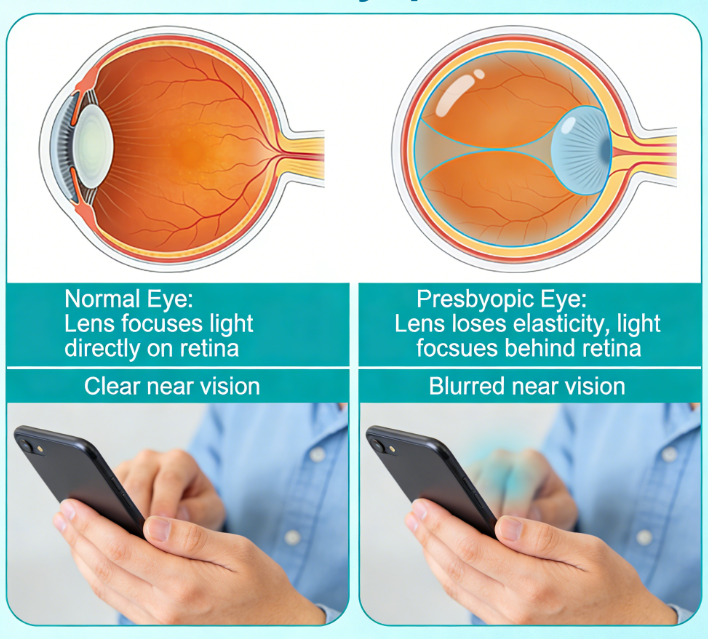
Ensure 1–2 hours of outdoor activity every day. Natural light helps stimulate dopamine secretion in the retina. The wide outdoor view relieves long-term tension in the ciliary muscles and slows the decline of lens accommodation. Protect yourself from the sun during activities, and wear UV-protective sunglasses to avoid direct strong light. Choose mild exercises such as walking and Tai Chi to avoid eye injuries from intense sports. Long-term outdoor activities play a positive role in maintaining stable eye axis length.
3. Maintain a Balanced Diet
Eat more carrots and animal livers rich in vitamin A, citrus fruits high in vitamin C, and dark vegetables containing lutein. Supplement blueberries and nuts appropriately; their anthocyanins and zinc help protect the retina. Limit high-sugar foods, as excessive sugar may accelerate the denaturation of lens proteins. Drink enough water daily to maintain metabolic balance. Avoid smoking and drinking to reduce negative effects on eye blood vessels.
4. Regular Eye Examinations
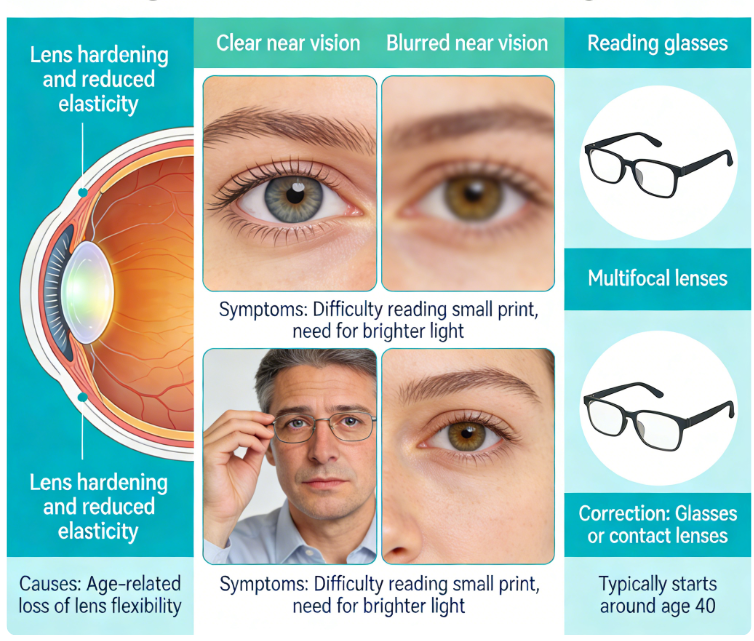
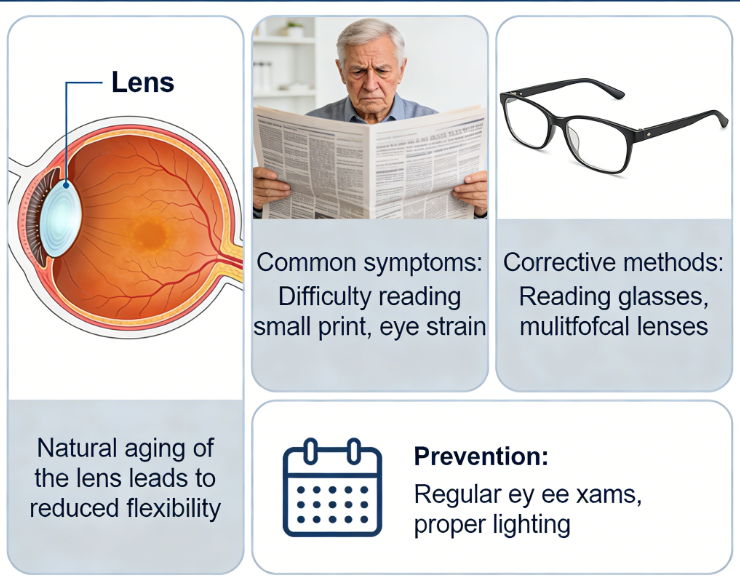
After the age of 40, it is recommended to have a comprehensive eye exam once a year, including visual acuity, intraocular pressure, and fundus evaluation. Refraction tests can detect changes in refractive status in a timely manner, and suitable reading glasses can be prescribed for correction. Examinations allow early detection of eye diseases such as cataracts and glaucoma; timely intervention slows the progression of presbyopia. Special groups such as diabetics should have exams every six months. You may consult your doctor about specific eye care measures during the examination.
How to Prevent Presbyopia
1. Adjust Eye-Using Habits
Reduce continuous close-up eye use. Rest for 5–10 minutes every 30–40 minutes by looking into the distance or closing your eyes to relax. Maintain a reading distance of 30–35 cm, and avoid using your eyes in overly bright or dim environments. Turn on eye-protection mode when using electronic devices, and adjust screen brightness and font size. Do not read while in moving vehicles, as this increases the burden on eye accommodation. Apply warm compresses to the eyes daily to promote local blood circulation.
2. Increase Outdoor Activities
Ensure 1–2 hours of outdoor activity every day. Natural light helps stimulate dopamine secretion in the retina. The wide outdoor view relieves long-term tension in the ciliary muscles and slows the decline of lens accommodation. Protect yourself from the sun during activities, and wear UV-protective sunglasses to avoid direct strong light. Choose mild exercises such as walking and Tai Chi to avoid eye injuries from intense sports. Long-term outdoor activities play a positive role in maintaining stable eye axis length.
3. Maintain a Balanced Diet
Eat more carrots and animal livers rich in vitamin A, citrus fruits high in vitamin C, and dark vegetables containing lutein. Supplement blueberries and nuts appropriately; their anthocyanins and zinc help protect the retina. Limit high-sugar foods, as excessive sugar may accelerate the denaturation of lens proteins. Drink enough water daily to maintain metabolic balance. Avoid smoking and drinking to reduce negative effects on eye blood vessels.
4. Regular Eye Examinations
After the age of 40, it is recommended to have a comprehensive eye exam once a year, including visual acuity, intraocular pressure, and fundus evaluation. Refraction tests can detect changes in refractive status in a timely manner, and suitable reading glasses can be prescribed for correction. Examinations allow early detection of eye diseases such as cataracts and glaucoma; timely intervention slows the progression of presbyopia. Special groups such as diabetics should have exams every six months. You may consult your doctor about specific eye care measures during the examination.
.png?w=768&h=1376)

.png?w=2048&h=2048)
-42.jpg?w=2048&h=2048)







.jpg?w=4096&h=4096)
-2.png?w=2048&h=2048)
-1.png?w=2048&h=2048)

-3.png?w=2048&h=2048)
-4.png?w=2048&h=2048)