
-74.png?w=896&h=1200)
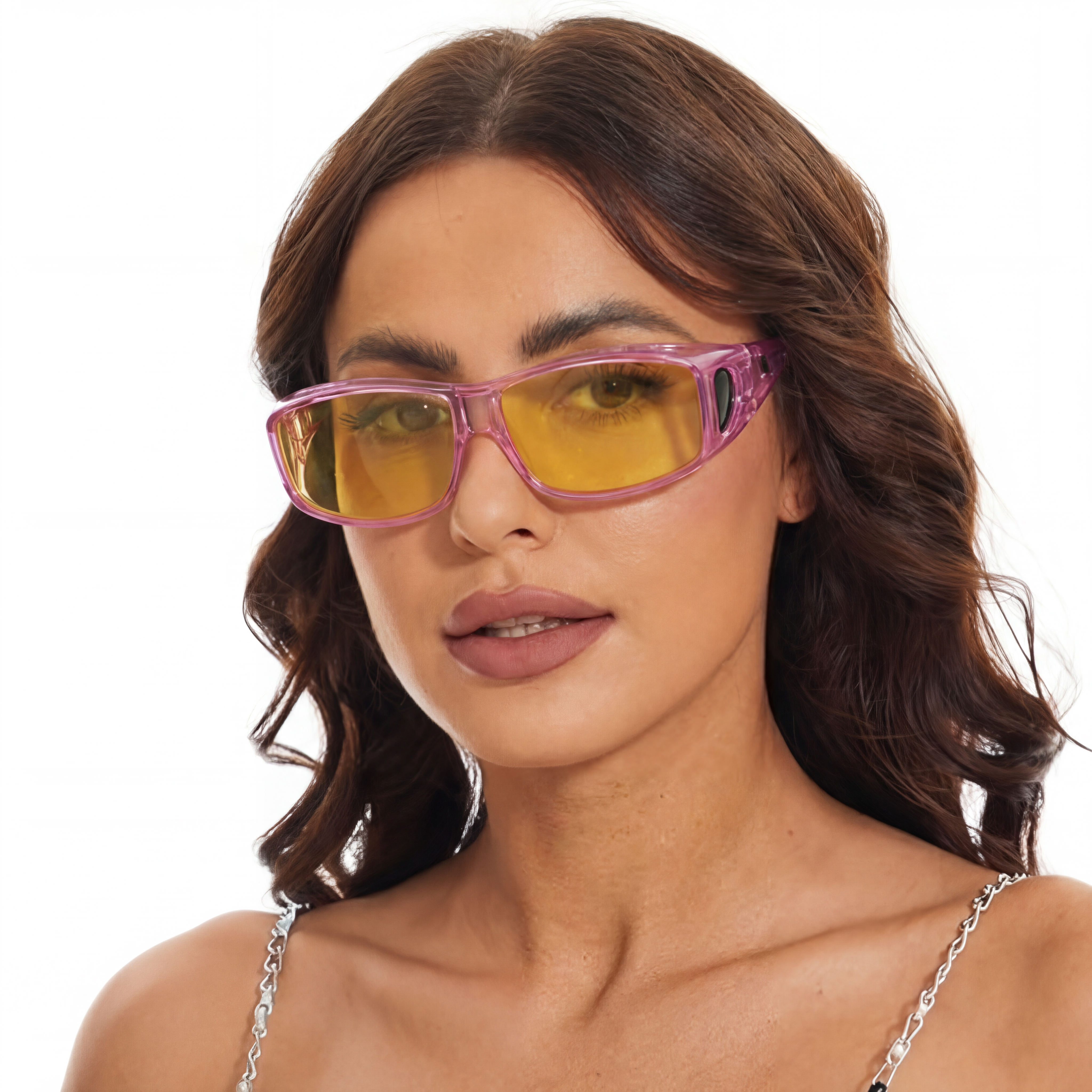
Yellow (or amber) sunglasses aren’t just a fashion choice—they’re designed to improve how you see in certain conditions.
What they actually do
Yellow lenses filter out blue light, which tends to scatter more in the atmosphere. This scattering is what causes glare and haziness. By reducing it, yellow sunglasses can make your vision feel sharper and clearer.
When they’re useful
- Low-light conditions
They brighten your field of view, making them popular for early morning, dusk, or overcast weather. - Driving (especially at night or in fog)
They can improve contrast, helping you distinguish objects more easily. That said, they don’t magically “turn night into day,” and some experts debate how much they help with night driving. - Sports like shooting, skiing, or cycling
Athletes use them to enhance contrast and depth perception—things like bumps on a ski slope or a clay target stand out more. - Foggy or hazy environments
By cutting through bluish haze, they can make surroundings look more defined.
What they’re not great for
- Bright, sunny conditions
They don’t reduce overall brightness as much as darker lenses (like gray or brown), so they’re not ideal for intense sunlight.

Bottom line
Yellow sunglasses are about contrast and clarity, not maximum sun protection. They’re best when visibility is reduced—not when the sun is blazing.
https://scoolglasses.com/products/square-glasses-jx-626

-3.png?h=2048&q=70&w=2048)
-1.png?w=2048&h=2048)
.png?w=2048&h=2048)


.jpg?w=569&h=569)

-14--1.png?w=2048&h=2048)


-1.png?w=2048&h=2048)